

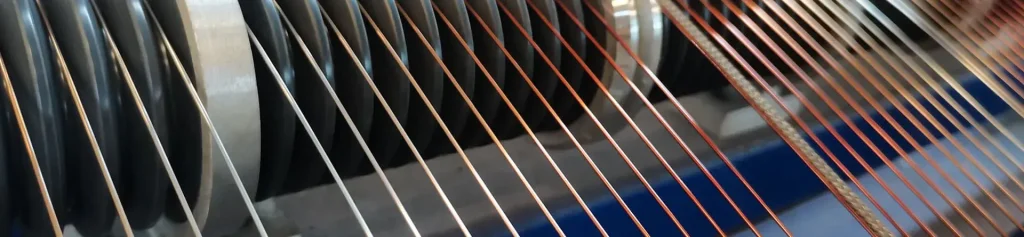
32 swg aluminium winding wire price
In the electronics, electrical appliances, and small motor manufacturing sectors, 32 SWG aluminum enameled wire (Standard Wire Gauge No. 32, standard wire diameter approximately 0.274mm or 0.27mm) has become a popular choice for winding materials due to its excellent lightweight properties and significant cost-effectiveness, making it a standout in the field of small precision windings.
Five key factors influencing 32 SWG aluminum enameled wire:
Aluminum Raw Material Cost: The Cornerstone of Price
The cost of aluminum ingots is the primary factor determining the price of aluminum enameled wire, typically accounting for over 80% of the final product cost.
International Aluminum Price Fluctuations: Enameled wire prices are highly synchronized with the price trends of aluminum ingots (A00/EC grade electrical round aluminum rods) on the London Metal Exchange (LME) and the Shanghai Futures Exchange (SHFE). Buyers need to constantly monitor real-time LME aluminum prices, as this is the benchmark for calculating current wire prices.
Processing Fees: The cost of processing aluminum ingots into qualified 32 SWG aluminum wire. Because 32 SWG (0.274mm) is a fine wire, the drawing and annealing processes require high precision, resulting in higher losses and more demanding equipment requirements. This leads to higher processing costs for fine wire compared to thicker wire.
Insulating Varnish and Heat Rating
The cost and performance of the insulating varnish directly determine the application range and durability of the wire, and are a significant source of price differentiation.
Insulation Rating:
F Grade (155℃): The mainstream in the market, using polyester or modified polyester varnish, offering high cost-effectiveness.
H Grade (180℃): Requires high-performance varnishes such as polyesterimide, offering better heat resistance, but at a higher cost.
C Grade (above 200℃): Typically uses polyamide-imide (AIW), used for extremely demanding applications, and is the most expensive.
Film Thickness: According to IEC 60317, film thickness is divided into Grade 1 (single layer) and Grade 2 (double layer). Grade 2 coating offers higher breakdown voltage and mechanical strength, meaning higher coating usage and longer baking time, thus increasing costs.
Production Process and Quality Standards
High-quality wire requires more stringent production processes and testing standards.
Quality Certification: Products conforming to international standards such as IEC, NEMA, or JIS have quality control costs (e.g., rigorous testing of elongation, springback angle, and breakdown voltage) that will be reflected in the final price.
Annealing Process: Ensuring sufficient elongation and flexibility to prevent breakage or coating peeling during high-speed winding relies on advanced annealing furnaces and precise temperature control.
Purchase Quantity and Packaging Method
Economies of Scale: The larger the purchase volume, the more pronounced the supplier’s economies of scale. Generally, the average price for large-volume orders (e.g., 1000kg) is 5%-10% lower than for small-volume orders.
Packaging requirements: The type of reel (e.g., PT-10 or PT-15), the weight per reel, and whether special moisture-proof or shockproof packaging is required will also be included in the total cost.
2024 Market Trends and Price Range Overview To give you a concrete understanding of the price of 32 SWG aluminum enameled wire, the following is an overview of the current market (second half of 2024):
| Factors affecting price | Key metrics (example) | Market Trends |
| Raw material aluminum price | LME aluminum price: ≈2900 USD/Tonne | The price fluctuates significantly and requires daily monitoring. |
| Insulation class | Grade F (155℃) | Highest market demand, moderate price |
| Paint film thickness | Grade 2 | Priced higher than Class 1, but with higher insulation reliability. |
| Purchase volume | >1000kg | More competitive prices |
Cost Comparison of Copper and Aluminum Wires: Significant Cost-Effectiveness Advantage
The biggest advantage of 32 SWG aluminum enameled wire in the current market lies in its cost-effectiveness:
| Feature Comparison | 32 SWG aluminum enameled wire | 32 SWG copper enameled wire |
| Raw material cost advantage | High (raw material prices are much lower than copper) | less |
| Price ratio | Baseline (1.0) | ≈2.5 to 3.0 times |
| conductivity | Slightly lower (slightly larger in volume) | High |
Using 32 SWG aluminum winding wire can save companies 60% to 75% on raw material procurement costs. This is a significant competitive advantage for products like small motors and transformers, which are not extremely sensitive to weight and volume but are cost-sensitive.
Seasonal and Policy Impacts
Seasonal factors in the commodity market (such as winter power shortages affecting aluminum smelting) and national import/export policies and environmental policies (affecting enamel and production costs) can cause short-term fluctuations in the price of 32 SWG aluminum enameled wire.
How to Obtain the Most Cost-Effective 32 SWG Aluminum Enameled Wire Quotes
Successful procurement is not just about finding the lowest price, but also about finding products with the best cost-performance ratio to avoid subsequent production and after-sales costs due to quality issues.
The “Three-Step Verification Method” for Inquiries
Specifications: SWG (32 SWG) or the exact bare wire diameter (0.274mm) must be provided.
Grade Confirmation:Specify the insulation grade (e.g., 155℃/F grade) and enamel grade (Grade 1 or Grade 2). This is crucial in determining paint costs.
Confirm the benchmark: Require suppliers to clearly state the aluminum ingot price (such as the daily average price of LME/SMMI) on which their quotes are based, separating processing fees from raw material costs. This facilitates a true comparison of “processing fees” between different suppliers.
| Evaluation indicators | Requirements of the purchaser | Risks to avoid |
| Technical capabilities | Examine whether the equipment is advanced for drawing and enameling, and whether it can stably produce 0.274mm fine wire. | Uneven wire diameter, unstable paint film thickness, and easy wire breakage. |
| Quality Certificate | The latest IEC/NEMA/JIS certifications and RoHS/REACH environmental reports must be provided. | Non-compliant products may lead to export difficulties or customer rejection. |
| Key performance report | Reports on elongation (to ensure the winding does not break) and breakdown voltage (to ensure insulation reliability) are required. | Frequent wire breakage during winding poses a high risk of coil short circuit. |
| Stable supply | Assess its production capacity and inventory to determine whether it can guarantee timely and sufficient supply when aluminum prices fluctuate. | Production line shutdowns delay delivery dates. |
Summarize:
Sourcing 32 SWG aluminum enameled wire is a complex task involving specialized technical expertise and market analysis. A successful sourcing strategy requires a deep understanding of how its price is driven by aluminum ingot costs, insulation varnish grade, and wire finishing fees.
Key Takeaways:
With a cost advantage of over 60%, 32 SWG aluminum wire is an ideal choice for windings in many small motors and transformers. When requesting a quote, be sure to specify the 0.274mm bare wire diameter, insulation class (e.g., 155°C), and varnish grade.
A reputable supplier provides consistent quality (high elongation, stable breakdown voltage), which is more important than simply offering the lowest price.
Call to Action:
Don’t let opaque market prices hinder your production. Contact our professional team today for a professional and accurate quote for 32 SWG aluminum enameled wire based on the current LME aluminum price and your specific technical specifications (e.g., 32 SWG / 155°C / Grade 2). We not only provide high-quality cables, but also offer comprehensive technical consultation and sample testing support to ensure you get the most competitive procurement solutions.